How to Style Butterfly Abaya: Fit and Draping Rules
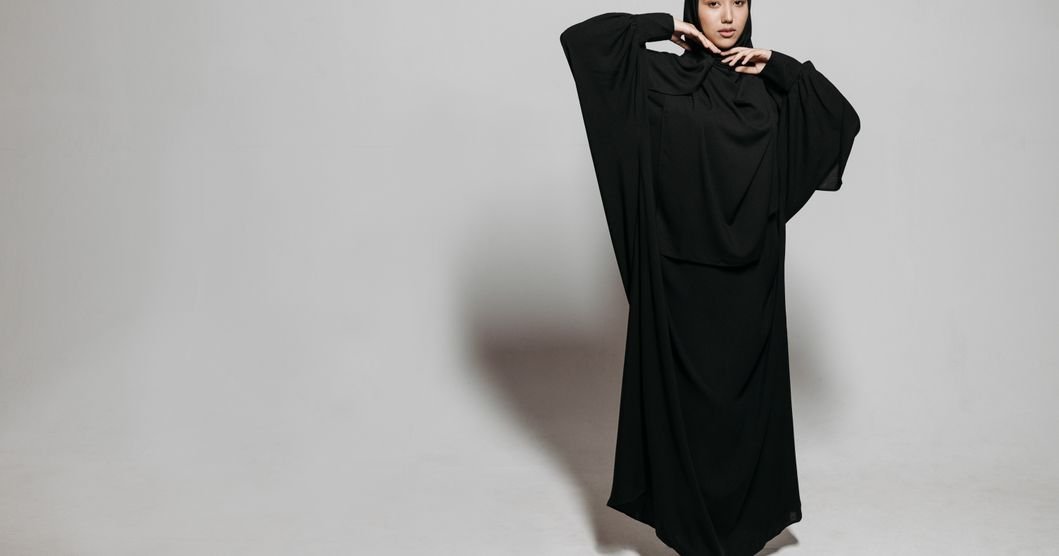
Photo by Pavel Danilyuk on Pexels · Source
To master how to style a butterfly abaya, you must balance three core elements: the streamlined inner layer beneath, the height at which fabric volume gathers, and a precise floor clearance. The single most common styling mistake is wearing bulky or contrasting garments underneath, which breaks the sleek vertical column and creates unwanted bulk through the midsection. When anchored correctly, this iconic sweeping silhouette offers unmatched grace.
What makes an abaya a butterfly cut?
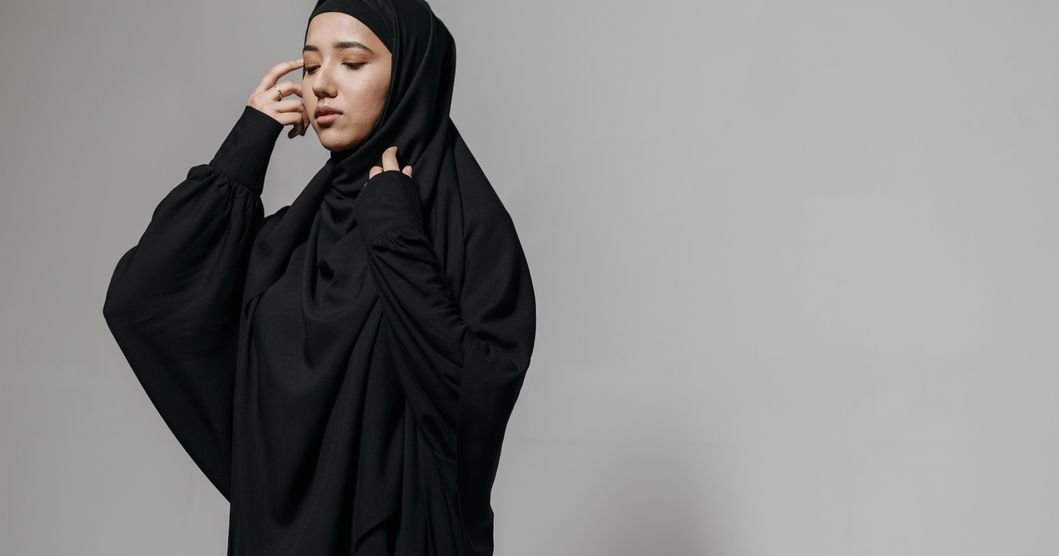
The butterfly cut, traditionally known across the Gulf as the farasha (the Arabic word for butterfly), is defined by its continuous, uncut span of fabric stretching seamlessly from cuff to cuff. Unlike structured outerwear, a farasha abaya eliminates the rigid shoulder seam and armhole inset entirely. Instead, the bodice and sleeves are cut as one wide, fluid panel that drapes softly over the shoulders, cascading down the body in a wing-like curve. As modest fashion evolves alongside modern design, this timeless shape continues to lead contemporary dress codes, standing out as a focal piece in current abaya design directions across Dubai, Riyadh, and Kuwait.
Understanding the distinction between silhouettes prevents common proportion mistakes. A traditional closed straight abaya follows the contours of the body with a drop-shoulder or set-in sleeve, maintaining a narrow vertical footprint. A kimono silhouette features a defined shoulder line, wide rectangular sleeves, and an open front, as discussed in our guide on how to style a kimono abaya. The farasha, by contrast, relies entirely on continuous breadth. The fabric floats away from the torso, creating natural folds that movement brings to life.
Why the missing armhole seam changes garment dynamics
Because there is no armhole seam to anchor the sleeve to your shoulder socket, the entire weight of the garment rests on your shoulder slope and nape. When you raise your arm, the fabric lifts from the opposite hem line rather than articulating at the shoulder joint. This structural characteristic changes everything about how the garment travels with you. It demands an intentional approach to undergarments, sleeve management, and fabric weight, as the wing expands horizontally whenever your arms are in motion.
Building the inner column: What to wear underneath
The cardinal rule when learning how to style a butterfly abaya is establishing a clean, unbroken inner column. Because the farasha cut adds substantial horizontal volume through its winged sides, whatever sits underneath must read as a singular, streamlined vertical line. Introducing conflicting patterns, contrasting colour blocks, or thick fabrics beneath the abaya creates visual clutter that destroys the floating quality of the drape.
To achieve a refined look across GCC climates, select underlayers that complement your abaya's tone while maintaining a sleek profile:
- Monochromatic Inner Sets: Pair a fitted, soft-knit long-sleeve top with fluid, wide-leg trousers in the exact same hue as your abaya. A monochrome black or deep mocha foundation makes the outer wing drape effortlessly without visual disruption.
- Smooth Slip Dresses: A matte satin or fine jersey sleeveless slip dress offers a seamless layer. Ensure the slip hem sits 2 to 3 centimetres shorter than your abaya hem to prevent awkward overlap.
- Tonal Tailored Separates: High-waisted straight trousers combined with a tucked-in stretch viscose top keep the midrib smooth, ensuring no extra fabric gathers under the farasha's central drape.
Pay close attention to your inner sleeves. Because raising your arms causes the farasha wing to open wide, your arms will be visible up to the elbow or shoulder depending on the lift. Always wear a fitted long-sleeve inner top or dedicated jersey arm sleeves in a matching skin tone or coordinating dark shade to maintain modest coverage without adding bulk inside the sleeve panel.
Mastering volume and drape: Proportion, belting, and positioning
Controlling where volume sits on the body determines whether a farasha looks regal or overwhelming. In a well-designed butterfly cut, the widest arc of the wing should crest between the mid-forearm and the hip line. If the drape flares too high near the bust, it widens the upper body; if it flares too low near the thighs, it drags the silhouette down. Check that the shoulder fabric sits evenly across your collarbones without riding back against your throat.
Managing the generous wingspan during daily activities requires simple, practical techniques. When dining, driving through Dubai, or managing young children, letting wide wings float freely can be impractical. You can subtly gather the inner edge of the wing and secure it to your inner wrist using a small, clear silicone band, or place a decorative magnetic hijab pin inside the sleeve fold near your hip. This temporarily secures the volume while keeping the exterior fabric pristine.
Belting a farasha abaya requires careful execution. Attempting to tie a wide leather belt around the outside of a fully draped butterfly abaya crushes the wings, creating harsh, bunched gathers that ruin the line. If you wish to define your waist, use an internal waist tie. Many farasha designs feature inner ribbons stitched into the front seam. Cinch these ribbons tightly across your front waist underneath the abaya while letting the outer back and wings float completely free. This creates a tailored silhouette at the front while preserving the sweeping wingspan from the sides and back.
Selecting the right fabric for fluid movement
Fabric selection dictates how a butterfly abaya hangs, moves, and reacts to humidity across the Gulf. A heavy or stiff fabric will flare out rigidly, making the wearer look broader, whereas a soft, flowing textile falls vertically back toward the body when your arms are down.
When selecting your garment, consider how these core modest fashion textiles behave in a farasha cut:
Premium Nida and Korean Nida: These silky-smooth, matte-finish fabrics represent the gold standard for daily wear. Nida has a medium weight with a cool hand-feel, making it ideal for navigating warm air and air-conditioned spaces in Sharjah or Abu Dhabi. It holds the wing shape cleanly without stiffening. For an impeccable corporate or formal look, consider the Zahra Minimal Farasha Drape Royal Abaya (AED 513), crafted from Premium Nida in Midnight Black, which offers a structured yet fluid drape.
Matte Crepe and Textured Crepe: Crepe features a subtle pebbled weave that resists static and slipping. It offers a slightly weightier, fluid fall that drapes close to the body, making it exceptionally forgiving over underlayers.
Silk-Touch Nida and Luxe Organza: Silk-touch fabrics offer a delicate lustre for evening wear, while sheer organza creates breathtaking architectural volume. Organza requires an opaque, fluid inner dress to ground its drama.
Layered Chiffon: Chiffon is lightweight and airy, floating gracefully with every step. Because of its sheer nature, multi-layered chiffon creates depth without adding weight, perfect for formal occasions.
Crinkle Travel Crepe, Soft Twill and Jacquard Nida: Crinkle crepe requires zero ironing, making it ideal for travel across the GCC. Soft twill provides a touch more substance for cooler evening desert air, while jacquard nida carries a woven pattern that gives the wing a little more body in the cooler months.
To understand the full spectrum of textile characteristics, explore our comprehensive abaya fabric comparison guide.
| Fabric | How the wing falls | Best for | Watch out for |
|---|---|---|---|
| Premium Nida | Smooth medium drape with clean horizontal expansion | Everyday wear, work, and formal outings | Low quality substitutes that create static |
| Matte Crepe | Vertical fluid drop that hugs close when arms are down | Daily errands, warm days, and relaxed gatherings | Over-stretching when hung on narrow wire hangers |
| Layered Chiffon | Ultra-light floating movement with soft translucent layers | Weddings, Eid celebrations, and formal dinners | Snagging on sharp jewellery or embellished bags |
| Crinkle Travel Crepe | Textured, bouncy fall that holds structure without creasing | Suitcase packing, long commutes, and active days | Ironing out the intentional crinkle texture |
Fit and length rules: Navigating size and proportion
Unlike fitted or tailored outerwear, a farasha abaya offers substantial flexibility across body measurements because the bust, waist, and hip contours are absorbed into the wing drape. However, overall length and shoulder placement are critical. A butterfly abaya that is too long becomes a safety hazard and gathers dirt at the hem; one that is too short looks awkward when the wings lift.
Consult the standard Hoorain size guide to select your correct garment length based on your overall height and preferred footwear:
| Garment Length | Recommended Height Range | Floor Clearance Notes |
|---|---|---|
| 50 inches | 4 ft 10 in to 4 ft 11 in (147 to 150 cm) | Sits cleanly at the ankle bone with flat footwear |
| 52 inches | 5 ft 0 in to 5 ft 1 in (152 to 155 cm) | Clears the floor by 2 to 3 cm with flat sandals |
| 54 inches | 5 ft 2 in to 5 ft 3 in (157 to 160 cm) | Ideal mid-length for low wedges or standard flats |
| 56 inches | 5 ft 4 in to 5 ft 5 in (162 to 165 cm) | Standard UAE length, sweeps just above the heel |
| 58 inches | 5 ft 6 in to 5 ft 7 in (167 to 170 cm) | Full coverage for taller frames wearing modest heels |
| 60 inches | 5 ft 8 in to 5 ft 9 in (172 to 175 cm) | Elegant floor length for tall silhouettes |
| 62 inches | 5 ft 10 in to 6 ft 1 in (178 to 185 cm) | Extended length ensuring complete coverage |
Hoorain body sizes range from XS (bust 80–84 cm) up to XXL (bust 112–122 cm). When selecting a butterfly abaya, resist the urge to order a size larger than your normal dress size simply to gain extra fabric length. Sizing up unnecessarily widens the neckline and drops the shoulder placement too low, causing the neckline to slip back throughout the day. Always select your size based on your shoulder frame and bust measurement, using garment length as your primary guide.
Flattering every silhouette: Adapting the butterfly drape
The farasha cut is one of modest fashion's most versatile silhouettes. It gracefully accommodates fuller busts and broader shoulders by eliminating tight seam lines and softening the upper body outline. Hourglass and pear shapes benefit from the gentle downward fall of matte fabrics, which glide smoothly over the hips without clinging.
For more insights on flattering volume cuts across diverse body types, review our dedicated plus size abaya fit guide.
Petite frames can easily carry a farasha with a few practical adjustments. Wide horizontal fabrics can sometimes visually reduce height on a shorter torso. To balance this effect when mastering how to style a butterfly abaya on a petite frame, consider these adjustments:
- Hem Precision: Ensure the hem clears the floor by exactly 2 to 3 centimetres. A hem that drags on the ground shortens your appearance instantly.
- Select Lightweight Textiles: Choose soft Nida or thin Matte Crepe over thick twill so the wings collapse inwards when your arms rest at your sides.
- Elevate the Visual Waistband: Wear a high-waisted inner trouser set or raise your inner belt slightly above your natural waistline to lengthen your leg profile beneath the drape.
Styling the butterfly abaya across occasions
Everyday errands in the UAE heat
For running daily errands in Dubai or Riyadh, comfort and breathability are essential. Style a practical, dark-toned farasha such as the Joud Studio Farasha Drape Velvet Abaya (AED 338), crafted in Satin Trim Crepe in Midnight Black, over a breathable cotton-modal inner top and wide-leg linen trousers. Complete the ensemble with smooth leather slide sandals, a lightweight jersey hijab secured with a matte magnet, and a structured crossbody bag worn under the outer wing to keep your hands free.
The office and corporate meetings
Maintain a polished profile at work by choosing a structured Premium Nida farasha in charcoal, navy, or classic black. Keep the inner layer ultra-clean with a high-neck shell top and tailored straight-leg trousers. Tie internal waist strings loosely to bring gentle definition to the front while leaving the back floating. Pair with leather pointed-toe pumps, a structured leather tote bag, and a matching chiffon hijab pinned neatly under the chin.
Eid and family gatherings
Family celebrations call for elegant fabrics and subtle embellishment. Choose a butterfly abaya featuring delicate thread embroidery or subtle crystal trimming along the wing edges. Complement the rich fabric with a tonal satin slip dress underneath. Finish the look with metallic kitten heels, a compact embellished clutch held in hand, and a matching silk-mix Sheila wrapped loosely over an under-cap for effortless grace.
Weddings and evening events
Formal evening receptions demand maximum drama and liquid drape. The exquisite Zahra Minimal Farasha Drape Pearl Abaya (AED 1373), designed in Layered Chiffon in Ivory Sand, offers an unforgettable presence. Pair this sweeping piece with a smooth silk inner column in a subtle champagne hue. Accentuate the look with pointed metallic heels, sparkling drop earrings, and a fine chiffon scarf pinned with a crystal brooch.
Care and maintenance for wide-winged silhouettes
Because farasha abayas contain expansive panels of fabric, improper storage and laundering can lead to persistent horizontal creasing or fabric snagging along the wing seams. Protecting your investment ensures the wings drape flawlessly every time you step out.
Follow these essential maintenance steps to preserve your garment:
- Use Wide Padded Hangers: Never hang a farasha on thin wire or narrow plastic hangers. The weight of the continuous sleeve panels will create permanent puckers along the shoulder slope. Use wide, velvet-padded hangers.
- Steam Rather Than Iron: Direct iron heat can crush synthetic fibres and create unsightly shine marks across broad Nida or Crepe panels. Always use a vertical garment steamer, directing steam along the inner seam of the wing to let gravity pull out creases naturally.
- The Steamy Bathroom Method: When travelling across the GCC, hang your farasha on a padded hanger in the bathroom while taking a hot shower. The ambient steam relaxes transit creases without direct contact.
- Cool Hand Wash Delicate Pieces: Hand wash embellished or chiffon butterfly abayas in cool water using a gentle liquid detergent formulated for dark fabrics. Avoid twisting or wringing the wingspan.
- Drying and Packing: Lay the garment flat on a clean drying rack away from direct sunlight to preserve colour depth. When packing a suitcase, fold the body vertically into thirds first, then lay the wings flat over the top before rolling gently to prevent setting harsh cross-creases.
For detailed advice on maintaining your modest wardrobe, read our full abaya care and storage guide.
Frequently Asked Questions
How do I stop a butterfly abaya from dragging on the floor?
To keep your farasha hem clean and free from dragging, choose your garment length based strictly on your height and preferred shoe heel. For flat shoes, select a length that sits two to three centimetres above the ground. You can also use a delicate inner waist tie to pull the front hem up slightly without altering the outer sleeve drape.
Can I wear a shoulder bag with a butterfly abaya?
Yes, but placement matters. Wearing a shoulder bag strap over the outside of a farasha crushes the sleeve wing and distorts the draped silhouette. Instead, sling your crossbody or shoulder bag strap over your inner top before slipping on the abaya, allowing the strap to sit under the butterfly wing while the bag rests neatly at your hip.
Is a butterfly abaya suitable for short or petite women?
Absolutely. Petite women can look stunning in a butterfly abaya by choosing fluid, lightweight fabrics like thin Nida or Matte Crepe that fall vertically back toward the body. Ensure the hem clears the floor by two centimetres, choose a narrower wing cut, and pair the outfit with pointed heels to elongate your profile.
What is the difference between a farasha abaya and a butterfly abaya?
There is no functional difference. Farasha is the Arabic word for butterfly, and both terms describe an abaya cut with continuous fabric running from cuff to cuff without a standard armhole seam. The terms are used interchangeably throughout fashion boutiques in the UAE and wider Gulf region.
How do I keep my arms covered when raising my hands in a farasha?
Because a farasha wing opens wide when your arms lift, wear a fitted long-sleeve top or dedicated jersey arm sleeves underneath. Choose high-stretch, lightweight viscose or cotton sleeves in black or a matching skin tone to ensure complete, comfortable modest coverage throughout the day.
Can I belt a butterfly abaya around the outside?
External belting is generally not recommended for farasha cuts because cinching wide winged fabric from the outside creates bunching around the waist. Instead, use internal waist ribbons. Cinch these ribbons around your waist inside the abaya, leaving the outer front and back wings to drape smoothly and freely.
Shop the collection at Hoorain Abaya →