Abaya vs Jalabiya vs Kaftan: What's the Difference?

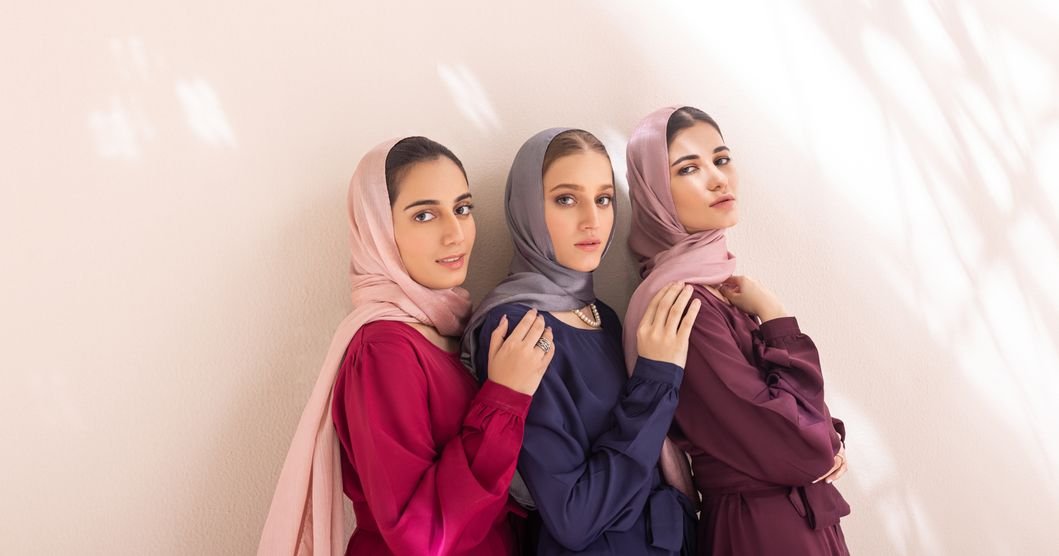
Photo by Taiye Salawu on Pexels · Source
The short answer: an abaya is an outer layer worn over an outfit, a jalabiya is a one-piece dress worn on its own, and a kaftan is a wide-sleeved robe with Ottoman and Moroccan roots that sits between the two. What separates them is cut and context, not how modest each one is.
What Is an Abaya?
An abaya is an outer garment. That single fact explains almost everything else about it. It is designed to go over whatever you are already wearing when you leave the house, which is why the fit is generous through the body, why the sleeves are cut wide enough to slide over another sleeve, and why the length is meant to fall close to the floor rather than to your ankle.
Across the Gulf the abaya is the everyday public layer. It is most often black, though that is a convention rather than a rule, and Emirati and Qatari design houses have spent the last decade pushing colour, panelling, and embroidery into pieces that would have been unusual twenty years ago. Interestingly, the garment's dominance in the UAE is more recent than most people assume — dress historians place its rise here within roughly the last sixty years, layered onto an older local wardrobe of thawb and shayla.
Structurally there are two families: the open abaya, which ties or falls open at the front, and the closed abaya, which is a single sealed silhouette. The choice changes how the piece drapes and what you can wear underneath it, which is covered in more depth in our guide to open versus closed abayas. Fabric matters just as much — nida, crepe, and chiffon each hang differently, as set out in the abaya fabric guide.
What Is a Jalabiya?
A jalabiya is a complete outfit rather than a layer. You put it on and you are dressed. The word traces back to the Egyptian galabeya, a single-piece robe that was ordinary working dress in farming communities long before it became festive wear, and versions of it appear across North Africa and the Levant under slightly different spellings and cuts.
What most people in the Gulf mean by jalabiya today is the celebratory version: a loose, flowing dress with a high neckline, long sleeves, and no waist seam, usually in colour and usually decorated. Gold thread, tatreez-style embroidery, lace insets, beaded cuffs, and contrast trims are all standard. The Emirati jalabiya in particular has developed into a recognisable house style — wide through the body, richly worked at the neckline and cuffs, and cut long enough to move.
Two details are worth knowing. First, in its original North African form the jalabiya is essentially unisex; the men's and women's versions differ in decoration and detail rather than in basic shape. Second, because a jalabiya covers on its own, it does not need an abaya over it indoors. That is precisely why it dominates at home, at family gatherings, and at women-only events, where an outer layer would be redundant.
What Is a Kaftan?
A kaftan is the widest-travelled of the three. Its roots run back through Persian dress into the Ottoman court, and it developed a distinct and highly embellished tradition in Morocco, where the formal caftan is still bridal and ceremonial dress rather than casual wear.
The defining feature is the sleeve. A kaftan sleeve is dramatic — wide, often floor-skimming, sometimes cut as a full drape from shoulder to hem — and the body is loose and unstructured with no fitted waist. That silhouette is what makes a kaftan read as leisure rather than formality in most of the world: it is resort dress, at-home dress, hosting dress.
The exception is the heavily worked ceremonial caftan, which is unmistakably formal. So the same word covers a linen beach robe and a hand-embroidered wedding garment, and context does all the work. In Gulf wardrobes the kaftan usually shows up as an elevated at-home or majlis piece, and the line between a relaxed kaftan and a plain jalabiya can genuinely blur.
Abaya vs Jalabiya vs Kaftan: The Differences at a Glance
| Abaya | Jalabiya | Kaftan | |
|---|---|---|---|
| Worn how | Over an outfit | On its own | On its own |
| Origin | Arabian Peninsula | Egypt / North Africa | Persia, Ottoman world, Morocco |
| Silhouette | Straight or A-line outer layer | Loose one-piece, no waist seam | Loose robe, dramatic wide sleeve |
| Colour | Traditionally black; colour growing | Colour and pattern are the norm | Colour, print, and embellishment |
| Typical fabric | Nida, crepe, twill | Chiffon, satin, cotton, silk | Silk, linen, brocade |
| Usual setting | Public and outdoors | Home, Ramadan, Eid, family events | Resort, hosting, ceremonial |
| Front opening | Open or closed | Almost always closed | Usually closed, sometimes open |
How to Tell Them Apart in Two Seconds
There is one question that resolves nearly every case: is the garment covering another outfit, or is it the outfit?
- If it is a layer worn over clothes and could be taken off to reveal a full outfit underneath, it is an abaya.
- If it is a single dress with a straightforward long sleeve and a decorated neckline, worn alone, it is a jalabiya.
- If it is a single robe with an exaggerated, wide, flowing sleeve, worn alone, it is a kaftan.
Edge cases exist, and they are usually deliberate. A jalabiya-cut abaya — closed, decorated, and worn without anything meaningful underneath — is a real category that designers make on purpose. When you cannot tell, look at the sleeve opening and the front seam rather than at the embroidery.
When Gulf Women Actually Wear Each One
The practical division across the UAE and the wider GCC is closer to a routine than a rulebook.
Daily life outside the home belongs to the abaya. Work, errands, the school run, the mall, travel — an abaya goes over whatever is already on, which is exactly why it survives as the default. It is the lowest-friction garment in the wardrobe.
Ramadan evenings and family iftars are the jalabiya's territory. It is comfortable enough to sit in for three hours, covered enough that nothing extra is needed indoors, and festive enough for guests. Lighter, flowing jalabiya cuts in chiffon or soft satin are the standard choice through the month.
Eid morning splits. Many women wear a jalabiya at home and change into an occasion abaya to visit, or wear a statement abaya over a jalabiya for the visiting portion of the day. Our Eid abaya edit covers how those pieces are chosen.
Majlis hosting and women-only gatherings favour the kaftan or a heavily worked jalabiya, because there is no outer layer needed and the sleeve can be as dramatic as the occasion allows.
Weddings and formal evenings pull in the embellished end of all three. A ceremonial caftan, a beaded jalabiya, or an occasion abaya in velvet or organza are all correct; the choice usually comes down to whether the event is mixed and whether you will arrive covered.
Travel tips back to the abaya, for the same reason it wins on ordinary days — it goes over an existing outfit and solves the problem of dressing in an unfamiliar climate.
Where Thobe, Jilbab and Bisht Fit In
Three neighbouring terms cause most of the remaining confusion.
The thobe (thawb) is the ankle-length robe worn across the Gulf; in the UAE the men's white kandura is the version most visitors recognise, while the historic women's thawb was a wide overdress worn above other layers. In several countries the word is used loosely for what elsewhere would be called a jalabiya, which is why the two labels overlap in online listings.
The jilbab is a religious-dress term more than a regional one. It describes a long outer covering, and in contemporary usage typically refers to a two-piece or one-piece outer garment worn with a headscarf. Functionally it overlaps heavily with the abaya; the difference is mostly one of vocabulary and community.
The bisht is the ceremonial cloak, historically a marker of status worn by rulers, dignitaries, and grooms, usually in fine wool with metallic trim at the edges. Its influence on womenswear is visible in the bisht abaya — an open, squared-shoulder silhouette with defined edging that borrows the cloak's authority. For more on how these garments carry meaning locally, see the abaya's place in Gulf fashion today.
Which Should You Buy First?
If you are building a modest wardrobe from scratch in the UAE, buy the abaya first. It is the only one of the three that works over an existing wardrobe, which means one good piece immediately makes everything you already own wearable in public. A plain, well-cut crepe abaya in black or a neutral does more work in a week than a decorated occasion piece does in a season — the reasoning is set out fully in how to choose your first abaya.
Buy the jalabiya second, and buy it with a specific month in mind. Ramadan and Eid are when it earns its place, and buying with an occasion in view stops you from choosing something too heavy to sit in or too plain to feel festive.
The kaftan is a third purchase for most people, and it is worth waiting until you know whether you host. If you do, a relaxed kaftan-style piece such as the Rana Soft Pleat Resort Tie Dune Abaya covers the at-home register, while an occasion piece like the Hessa Velvet Majlis Collar Nocturne Abaya handles the evenings that call for something heavier. Browse the full range in our collections.
Frequently Asked Questions
Is a jalabiya the same as an abaya?
No. An abaya is an outer garment worn over your clothes, while a jalabiya is a complete one-piece dress worn on its own. You can wear an abaya over a jalabiya, but you would not wear a jalabiya over anything.
Can you wear a jalabiya outside the house in the UAE?
Yes. A jalabiya is fully covering on its own and is commonly worn out for family gatherings, Eid visits, and women-only events. Many women still add an abaya over it for public or mixed settings, mostly out of habit and convenience rather than necessity.
What is the difference between a kaftan and a jalabiya?
The sleeve. A kaftan has a dramatic, wide, flowing sleeve and an unstructured robe-like body, while a jalabiya has a more conventional long sleeve and a straighter one-piece cut. A kaftan also carries stronger Ottoman and Moroccan associations, whereas the jalabiya is North African and Levantine in origin.
Do jalabiyas have to be colourful?
No, but they usually are. Colour and decoration are the jalabiya's defining aesthetic, in deliberate contrast to the traditionally black abaya. Plain cotton and linen jalabiyas exist and are common as everyday at-home wear.
Which is more modest, an abaya or a jalabiya?
Neither is inherently more modest. Both cover the body fully when cut properly. Modesty depends on the fabric opacity, the length, the neckline, and what is worn underneath — not on which of the two labels the garment carries.
Is a jalabiya suitable for a wedding?
Yes, provided it is the embellished kind. A silk or satin jalabiya with heavy embroidery, beadwork, or metallic thread is standard wedding-guest dress across the Gulf. Save the plain cotton versions for home wear.
Shop the collection at Hoorain Abaya →